 Bundle & Save
 Camping Chair
 Hammocks
 Tote Bag
 Cooler & Coffee Cup
 Beach Towel
 Hooded Towels
 Picnic Blankets
 Bags & Backpacks
 Cooler Backpack
 Outdoor Puffy Blankets
 Tarp, Bug Net & Accessories
Best Camping Gear Checklist for When You Want to Travel Light

So, you're planning a weekend camping trip, and somehow you've convinced yourself you need three different cookware sets, a backup tent "just in case," enough clothing to survive a month in the wilderness, and a fancy camping gadget you saw on Instagram. You haul it all to your campsite, use about half of it, and spend the rest of the trip cursing yourself every time you have to dig through your pack.
Travelling light doesn’t mean suffering through your trip with the bare minimum or pretending you're an ultralight purist who cuts their toothbrush in half to save 2 grams. It's being smart with what you pack so you can enjoy the experience instead of lugging around a small house on your back.
After years of testing gear, watching people (ourselves included) make the same mistakes over and over, and countless conversations with experienced campers, we've figured out the camping gear that matters when you're trying to keep things light. This isn't a manifesto about minimalism but a practical guide to packing smarter, moving easier, and having more fun outdoors.

Best Camping Gear Checklist
Here's your quick-reference packing list. Of course, it depends on when and where you’re going and what you’ll be doing, but this is a good basic starting point. Print it, save it to your phone, tick things off as you pack.
Shelter, Sleep, Travel & Comfort
-
Hammock or lightweight tent
-
Sleeping bag (rated for conditions)
-
Sleeping pad or puffy blanket
- Camping chair
Clothing
-
2 pairs underwear
-
2 pairs socks
-
1 pair long pants
-
1 pair shorts
-
2 t-shirts or base layers
-
1 warm mid-layer (fleece/insulated jacket)
-
1 waterproof jacket
-
Swimmers
Cooking & Food
-
Lightweight camp stove
-
Single pot
-
Spork or eating utensils
-
Lighter/waterproof matches
-
Collapsible water bottle
-
Water filter (if needed)
-
Pre-portioned meals and snacks
-
Rubbish bags
Personal & Hygiene
-
Toothbrush and small toothpaste
-
Biodegradable camp soap
-
Quick-dry towel or sarong
-
Sunscreen
-
Insect repellent
-
Personal medications
-
Toilet paper and small trowel
-
Hand sanitiser
Safety, Navigation & Tools
-
First aid kit (bandaids, antiseptic, pain relief, blister treatment)
-
Map and compass/GPS
-
Headlamp with spare batteries
-
Sunglasses
-
Multi-tool or knife

The Core Principle of Packing Light: Multi-Use Over Single-Use
The secret to packing light without sacrificing comfort is choosing camping gear that does multiple jobs. A cool, high-tech single-purpose gadget might look fun in the store, but if it only does one thing, it's probably not earning its place in your pack.
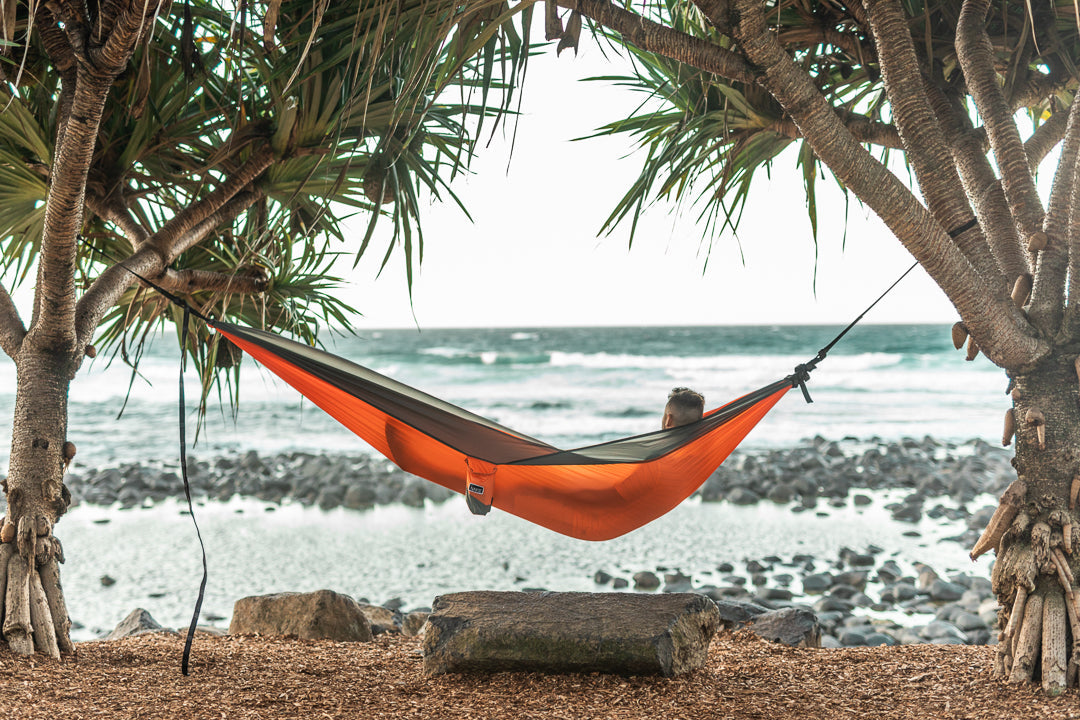
Your Nakie hammock is your bed, your chair, your relaxation spot, and your best mate at camp. A beach towel can be a sarong, a blanket, a privacy screen, a makeshift bag, or a picnic blanket. Your headlamp is a torch, a hands-free work light, and your reading lamp. See the pattern?
When every item pulls double or triple duty, you can cut your pack weight and volume significantly without giving up comfort or functionality.
Read more: Sustainable Camping & The Ethical Way to Set Up Camp
The Essential Light-Travel Camping Checklist
Shelter & Sleep System
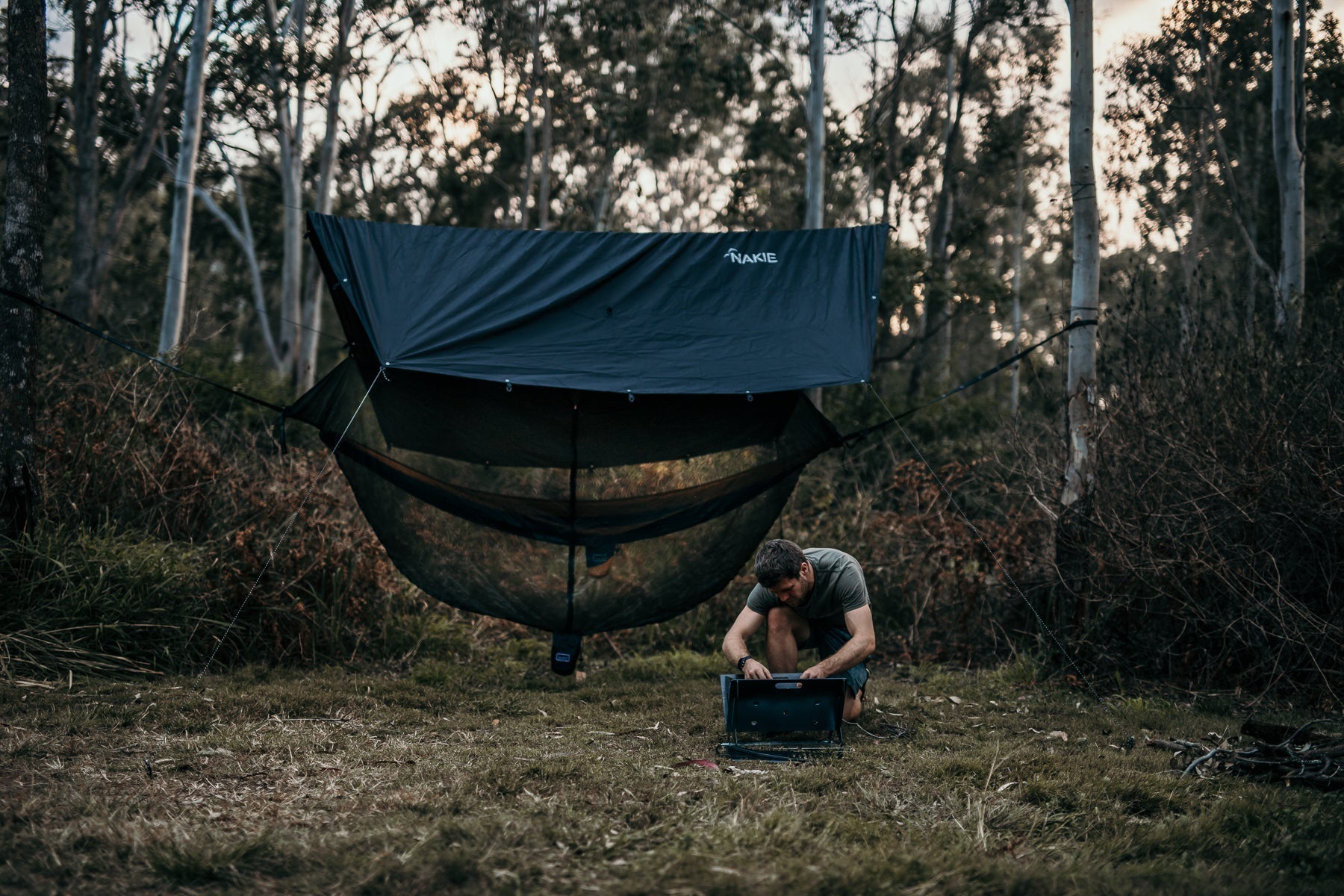
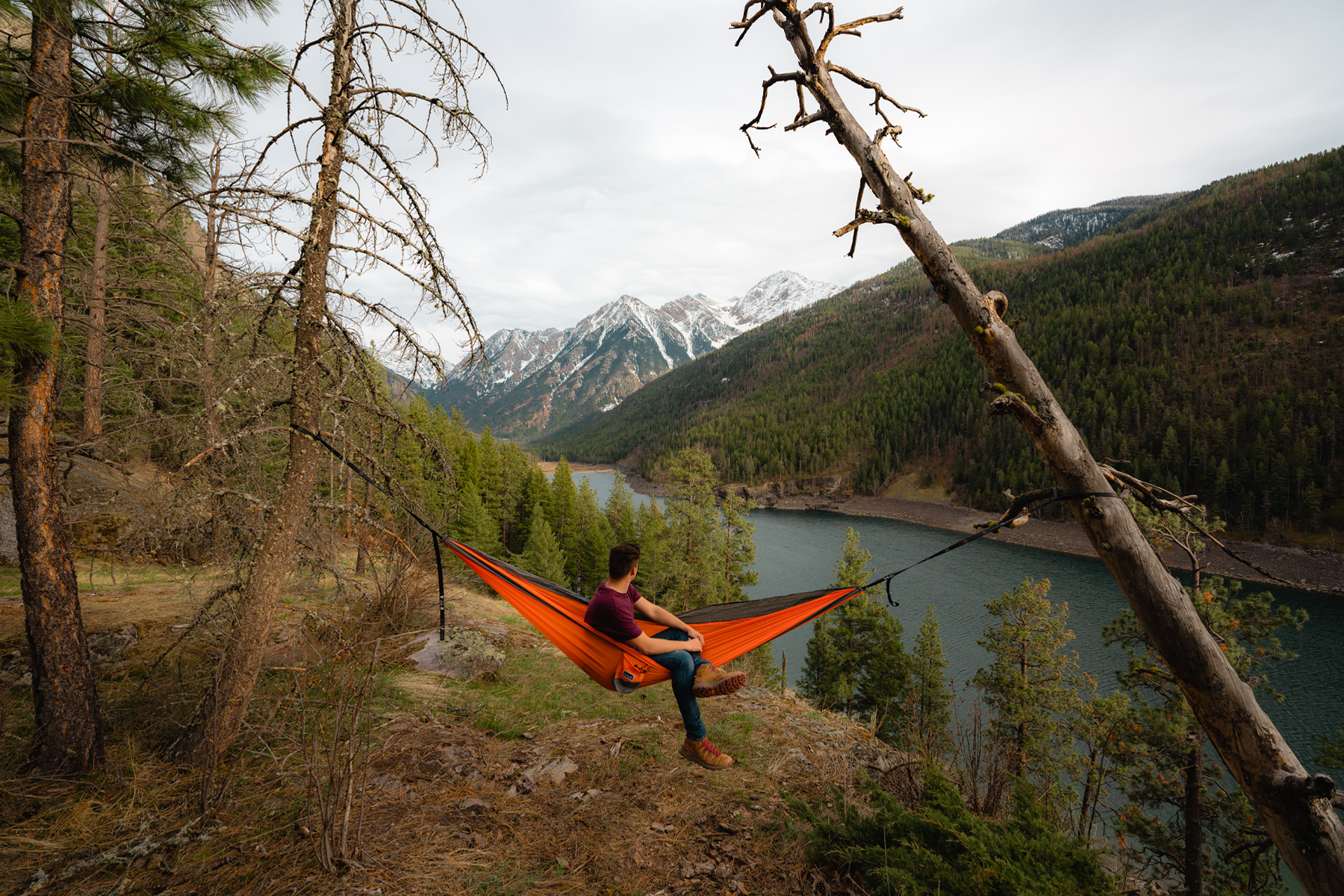
Hammock or lightweight tent. Choose based on where you're camping and your personal preference. If you're in an area with trees, a hammock setup is brilliant for saving weight and pack space. Nakie's hammocks pack down small, weigh next to nothing, and set up in minutes. Plus, you're sleeping off the ground, away from rocks, roots, and that puddle that forms exactly where you pitched your tent in the middle of the night.
If you're camping in areas without reliable tree coverage, a lightweight tent is your go. Look for something that's built to last, not just marketed as "ultralight" but falls apart after three trips. The lightest tent in the world is useless if it leaks the first time it rains.
Read more: How to Hang a Hammock Anywhere (Even Without Trees)

Sleeping bag appropriate for conditions. Don't bring a four-season expedition bag for summer camping. Match your bag to the weather conditions. A good rule: check the overnight low temperature for your destination and choose a bag rated about 5°C lower than that. You can always unzip if you're too warm, but you can't magic up extra insulation if you're freezing.
Sleeping pad or puffy blanket. Non-negotiable for comfort and insulation, even if you're in a hammock (yes, really – you need a blanket or a pad in a hammock or you'll freeze your bum off). Inflatable pads pack smaller than foam but require more care. Foam pads are bombproof but bulky. Puffy blankets are warm and multi-use, but not a substitute for a pad if you’re sleeping on the ground. Pick your compromise based on how you're travelling and how much space you have.
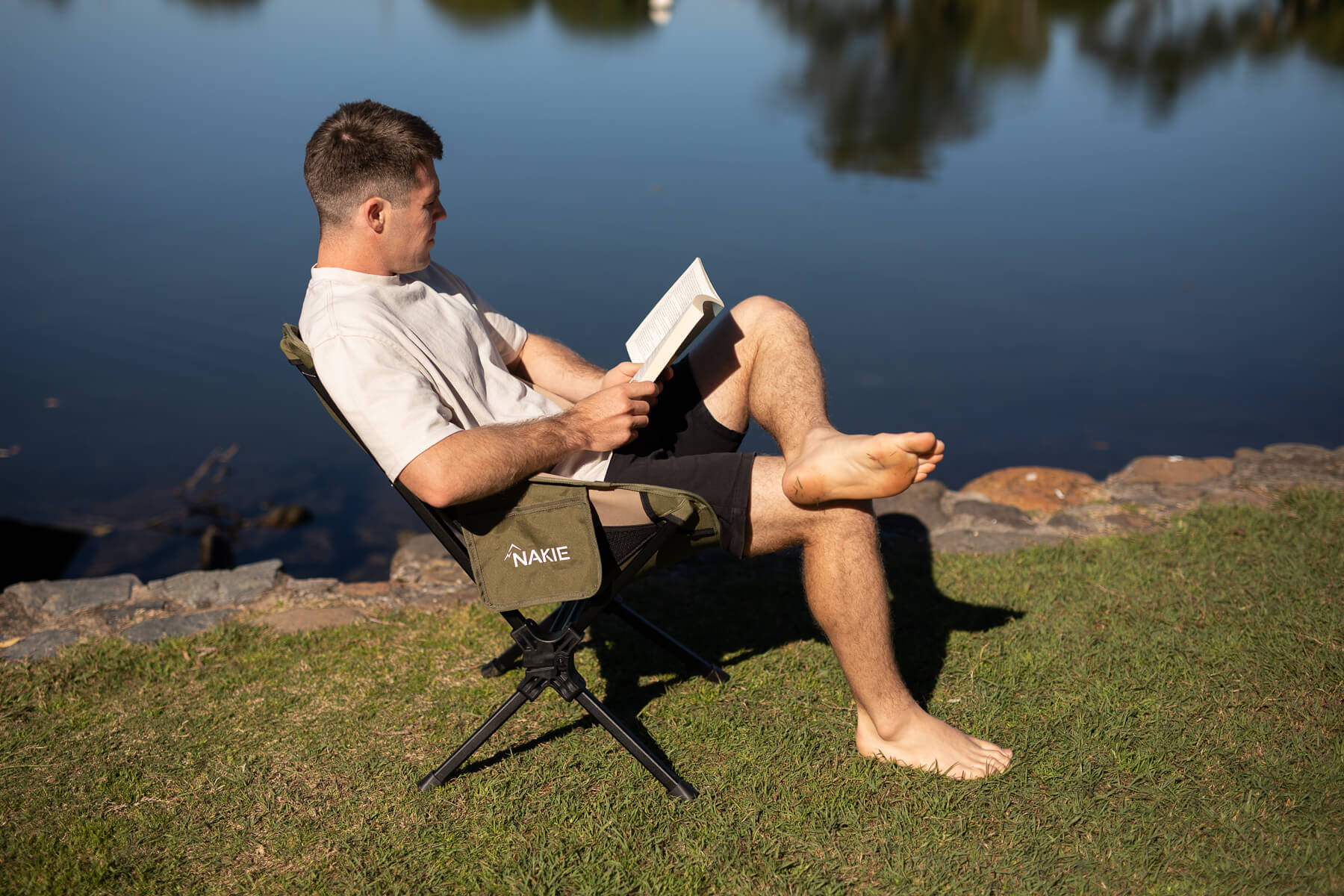
Camping chair. A lot of traditional camp chairs are massive, heavy, and take up way too much room in your boot or pack. But cutting down on weight doesn't mean sitting on a damp log or hunched over on a rock all night. If you’re bringing a chair, look for something compact that packs down small and doesn't add bulk. A lightweight seat like the Nakie camping chair weighs under 2kg, sets up in seconds, and gives you back support.
Clothing (Less Than You Think)
Here's where people really overpack. You don't need a different outfit for every day. You need versatile layers that you can mix and match.
-
2 pairs of underwear (one on, one spare)
-
2 pairs of socks (same logic—wear one, wash one)
-
1 pair of long pants
-
1 pair of shorts (or make your pants convertible ones)
-
2 t-shirts or base layers
-
1 warm mid-layer (fleece or insulated jacket)
-
1 waterproof outer layer
-
1 warm beanie
-
Swimmers (doubles as underwear in a pinch, and you're probably near water anyway)
That's it. Really. You're camping, not attending Fashion Week. Everything should be quick-dry where possible so you can wash items in a stream or with a bit of camp soap and have them ready by morning.
Cooking & Food
Cooking system. A lightweight camping stove and a single pot is all most people need. Forget the full cookware set – you can make surprisingly good meals with one pot and a spork. If you want to level up, add a small frying pan, but honestly, that's optional.
For weekend trips, pre-pack your meals at home. Portion out ingredients into bags or containers so you're not hauling entire bottles of oil and spice jars. Less weight, less space, less faffing around at camp.
Water. One collapsible water bottle or hydration bladder is usually enough. You can refill at your campsite or bring a small water filter if you're near a creek or river. Don't pack litres and litres of water if you know there's a water source where you're going.
Food. Pack calorie-dense foods that don't require refrigeration: nuts, dried fruit, energy bars, instant oatmeal, pasta, rice, dehydrated meals. Fresh foods are lovely but they're heavy and take up space. Save the gourmet cooking for car camping where weight doesn't matter.
Personal Items & Hygiene
-
Toothbrush and small toothpaste
-
Biodegradable camp soap (one small bottle for body, dishes, and clothes)
-
Quick-dry towel (or just use your sarong)
-
Sunscreen
-
Insect repellent
-
Any personal medications
-
Toilet paper (and a small trowel or know how to dig a proper cat hole)
-
Hand sanitiser
Notice what's not on this list: full-size shampoo bottles, multiple towels, excessive toiletries. You're in the bush. Nobody cares if your hair is perfect.
Safety & Navigation
First aid kit. A small, well-stocked first aid kit is essential. Include bandaids, antiseptic, blister treatment, pain relief, any personal medications, and basic supplies for treating cuts, burns, or sprains. Don't go overboard, but don't skimp either.
Navigation. Even if you're car camping, bring a map of the area and know how to read it. A compass or GPS device is smart for any hiking.
Light. A good headlamp with spare batteries. Hands-free light is infinitely better than holding a torch while trying to set up camp or cook dinner in the dark.
Whistle. Tiny, lightweight, could save your life if you get lost or injured. Attach it to your pack.
What NOT to Pack for A Weekend Camping Trip
Let's talk about what you should leave at home:
Excessive electronics. You don't need your laptop, tablet, portable speaker, and three charging cables. If you must bring electronics, keep it minimal. A phone for emergencies and photos is plenty.
Furniture. If you've got a hammock, you don't need a camping chair. If you're sleeping in a tent, you probably don't need a camping chair either. Every piece of furniture adds weight and bulk.
The "just in case" items. That thing you think you might need but have never actually used on previous trips? Leave it. If you've never needed it before, you probably won't need it this time either.
Duplicate items. You don't need three torches, four knives, or two stoves. Pick your best gear and trust it.
Why Quality Camping Gear is Essential When You're Packing Light
When you're cutting down on quantity, quality becomes even more important. That one piece of gear you do bring needs to work.
This is why we spent nine months developing our first product at Nakie. We wanted to create a hammock that would genuinely last, that wouldn't let people down when they needed it, and that wouldn't end up in landfill after a season. Made from 37 recycled plastic bottles, our hammocks are built for years of use, not months.
When you invest in quality gear, you're investing in reliability. The lightweight tent that costs a bit more but doesn't leak. The sleeping bag that keeps you warm at its rated temperature. The multi-tool that doesn't fall apart the first time you need it.
Cheap gear is expensive in the long run. It breaks, needs replacing, and often doesn't perform well even when it's new. Quality gear works better, lasts longer, and is genuinely lighter in the case of well-designed products that use premium materials.
Read more: Why Choosing Sustainable Brands is the Smarter Way to Shop

Strip Back to What’s Important
At Nakie, our whole philosophy is about getting outdoors and stripping back to nature. Leaving behind the noise, the stress, and yes – the excessive gear. It's about reconnecting with what matters: being present in beautiful places, having genuine experiences, and enjoying simplicity.
Packing light is part of that philosophy. Don’t look at it as deprivation – look at it as freedom. Freedom from hauling unnecessary weight. Freedom from spending half your trip managing your gear instead of enjoying your surroundings. Freedom to move easier, explore further, and be more present.
Start with this checklist. Adapt it to your specific needs and environment. Test it on shorter trips before committing to longer adventures. And most importantly, be honest with yourself about what you use versus what you think you might need.
The best camping trips aren't the ones where you brought everything. They're the ones where you brought exactly what you needed, nothing you didn't, and had the freedom to focus on why you went outdoors in the first place.
Now pack light, get outside, and enjoy yourself. The rest is just details.
Frequently Asked Questions
How do I know what's essential versus what's extra?
Ask yourself: "Did I use this on my last trip?" If you didn't, or if you've never been camping before, think about whether you'd use it on a normal day at home. If you wouldn't use a hair straightener at home for a weekend, you definitely don't need it camping.
Won't I be cold/uncomfortable with minimal gear?
Not if you bring the right minimal gear. There's a difference between packing light and packing silly. A quality sleeping bag rated for the conditions, a sleeping pad, and appropriate layers will keep you comfortable. The key is choosing versatile, quality items rather than cheap, single-use stuff.
What if I need something I didn't pack?
Honestly? You probably won't. And if you do, you'll improvise. That's part of camping. Humans are resourceful – we've survived for thousands of years with way less than what's in a modern backpack. The skills you develop from making do with less are actually valuable. Plus, on a practical level, most campsites aren't that far from civilisation if you genuinely forgot something critical.
How can I pack light when camping with kids?
Kids do require more gear, but the same principles apply. Each kid gets their own small pack with essentials. Focus on multi-use items even more – a hammock can entertain kids for hours and serves as their bed. Bring versatile toys (cards, a ball) rather than lots of specific toys. Pre-portion all food and snacks. And remember, kids need less than you think too – they're generally more adaptable and less fussed about comfort than adults.
What about camping in different seasons?
Your core checklist stays mostly the same; you just adjust your sleeping bag, clothing layers, and a few specific items. Winter camping adds a warmer sleeping bag, more insulation layers, and maybe a sleeping pad with higher R-value. Summer camping means lighter sleeping gear and more sun protection. The multi-use principle matters even more when conditions change – versatile layers you can add or remove beat single-purpose items every time.